ServicesBusiness Valuation
Business Valuation in Taylor, TX
Before you sell, retire or buy out a partner, you need a number you can stand on. We study your earnings, assets and risks, then show you the likely sale range and how we got there. It stays confidential, and it costs you nothing.
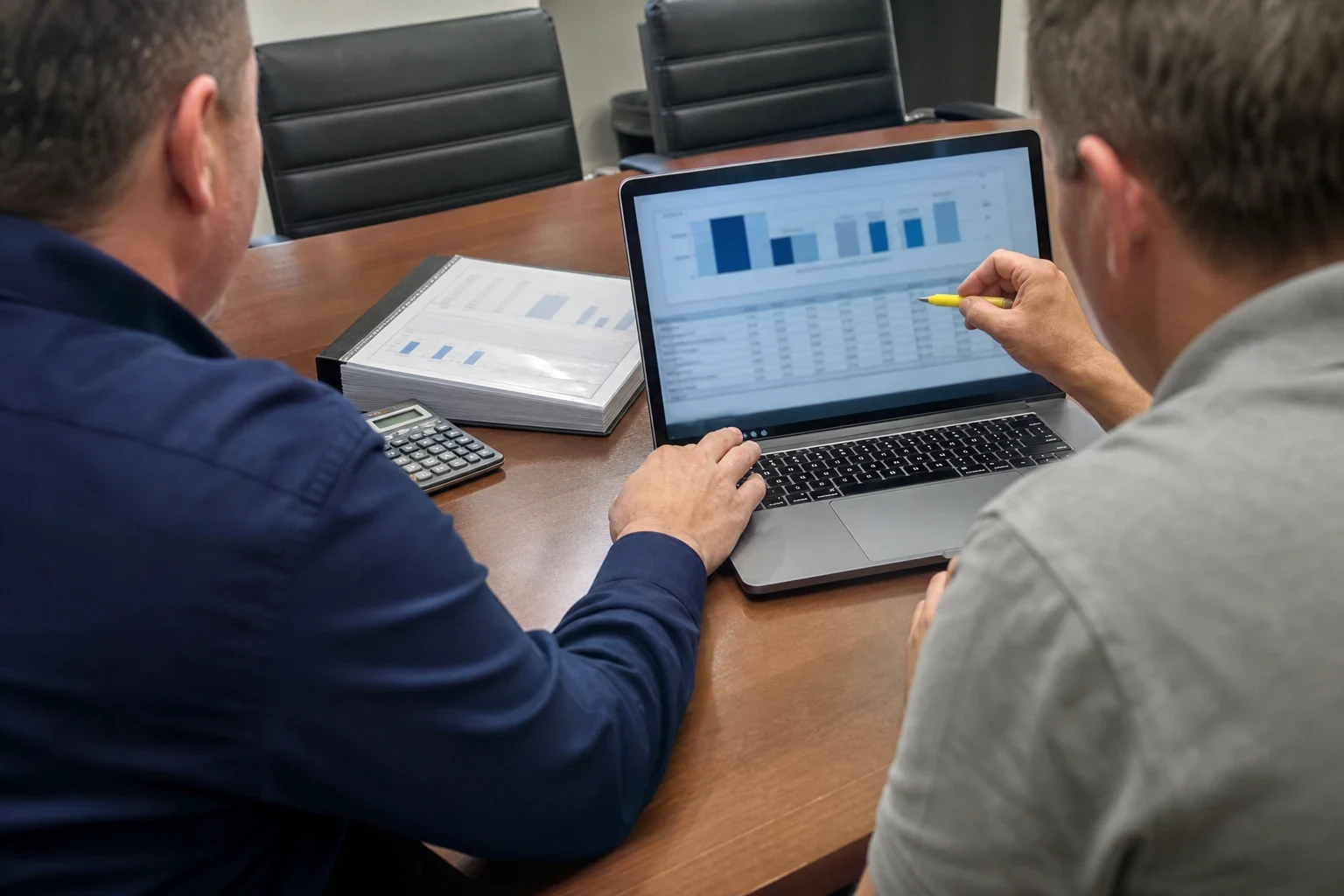
A careful number, built from your books
A business valuation is our written opinion of what a qualified buyer would likely pay for your company today. We start with what the business actually earns for its owner, adjust for one-time and personal expenses, and compare that against how similar businesses have been priced.
We treat your information with care at every step. Your financials stay with us, we never contact your staff, customers or vendors, and our meetings happen at our office or by phone and video, away from your shop floor. A valuation done quietly protects the business you are measuring.
Many owners in Taylor and nearby towns like Hutto and Round Rock come to us years before they plan to sell. A clear valuation shows what is already working and what is holding the price down, while there is still time to change it.
What your valuation covers
- Normalized earnings
- We rebuild your profit and loss to show seller's discretionary earnings, or EBITDA for larger companies. Costs a new owner would not inherit, such as your own pay, a personal vehicle run through the company or a one-off legal fee, go back into the earnings figure.
- Market comparisons
- We look at how businesses of similar size and type have sold. Multiples differ widely between a service company with recurring contracts and a retail shop that depends on foot traffic.
- Asset review
- Equipment, vehicles, inventory and fixtures are listed and weighed. For asset-heavy companies, this sets a floor under the price.
- Risk factors in plain terms
- We flag the things buyers and lenders will ask about: customer concentration, how much the business depends on you personally, lease terms and staff turnover.
- A walk-through of the results
- You get a likely price range and a meeting to go over it. We explain each adjustment so you can follow the math and question any part of it.
When a valuation is the right next step
You are thinking about retirement
Even if the exit is three or five years away, knowing today's value tells you whether the sale will fund the retirement you have in mind.
Someone made you an offer
An unsolicited offer can be generous or far too low. A valuation lets you answer from facts instead of a guess.
A partner wants out
Buyouts go more smoothly when both sides start from an independent number. Our Partner Buyouts and Succession page covers the next steps.
Growth has stalled
If revenue is flat and you are unsure whether to reinvest or sell, the valuation shows which parts of the business buyers would pay for.
You are planning the estate
Family and advisors need a realistic picture of what the business is worth to plan around it.
What moves your business's value
Our valuations are free, with no retainers and no hidden fees. What deserves your attention is the value itself, and these factors shift it more than any others. Knowing them early gives you room to act.
Clean, provable earnings
Buyers and lenders pay for income they can verify. Tax returns that match your books carry far more weight than cash that never reached the records.
Dependence on the owner
If every key customer calls you directly, a buyer sees risk. A trained manager and written procedures raise value.
Customer concentration
When one client brings in a large share of revenue, buyers discount the price. A broader customer base reads as steadier.
Lease and location terms
A transferable lease with years remaining reassures buyers. A short or non-assignable lease can stall a deal entirely.
Trend over time
Three years of steady or rising earnings are worth more than one strong year after two weak ones.
How the valuation works
- 1
A first conversation
We talk by phone about your business, your goals and your timeline. Nothing is shared outside that call.
- 2
Gathering the documents
We usually ask for three years of tax returns, profit and loss statements, a current balance sheet and a list of major equipment. If something is missing, we work with what you have and note it.
- 3
Adjusting and comparing
We normalize your earnings, then test them against market multiples and asset values. Where the figures point in different directions, we explain which one a buyer would lean on and why.
- 4
Reviewing the range together
We meet at our office or by video to go through the results. You leave knowing the likely range, the reasoning behind it and the few changes that would most improve it.

Valuation questions owners ask
Will I be billed anything for the valuation?
No. We charge nothing for the review, and no invoice follows it later. Should you choose to sell down the road, listing with us costs nothing up front, and there are no retainers and no hidden fees. We only get paid when the seller does.
Could my staff or customers learn about the valuation?
Not from us. We do not show up at your business unannounced, and we never reach out to employees, vendors or clients. Our meetings take place at our office or by phone and video, and the documents you share remain in our hands.
Is this the same as a formal appraisal?
No. Ours is a broker's opinion of market value, based on how buyers actually price businesses. Some lenders, courts and tax matters require a formal appraisal, and we will tell you plainly if your situation calls for one.
Do I have to list my business with you afterward?
There is no obligation. Some owners use the valuation to plan an exit years out, and others simply want to know where they stand. If you do decide to sell, our Sell a Business page explains how listings work.
How long does the number stay accurate?
A valuation reflects your latest financials and current market conditions. A new year of earnings, a lost major customer or a shift in lending can move it, so many owners update it each year as they approach a sale.

Find out where your business stands
One confidential conversation is enough to get started. We will tell you which documents to gather and what to expect from the review.